If you have tried chords on MILO’s guitar, you may have noticed they sounded a little like a keyboard pretending to be a guitar. With the latest update, that has changed.
Listen first
Before
After
The same six chords at the same speed and the same volume. Only the guitar changed.
What’s different
1. The fingers go where a guitarist’s would
Before, MILO built every chord the same way: one stack of notes, simply slid up or down. A real guitarist doesn’t play like that. Every chord has its own finger position, called a “shape”. Some let a few strings ring freely, and others need one finger pressed across all six strings at once. MILO now knows these shapes and picks the right one for every note you press.
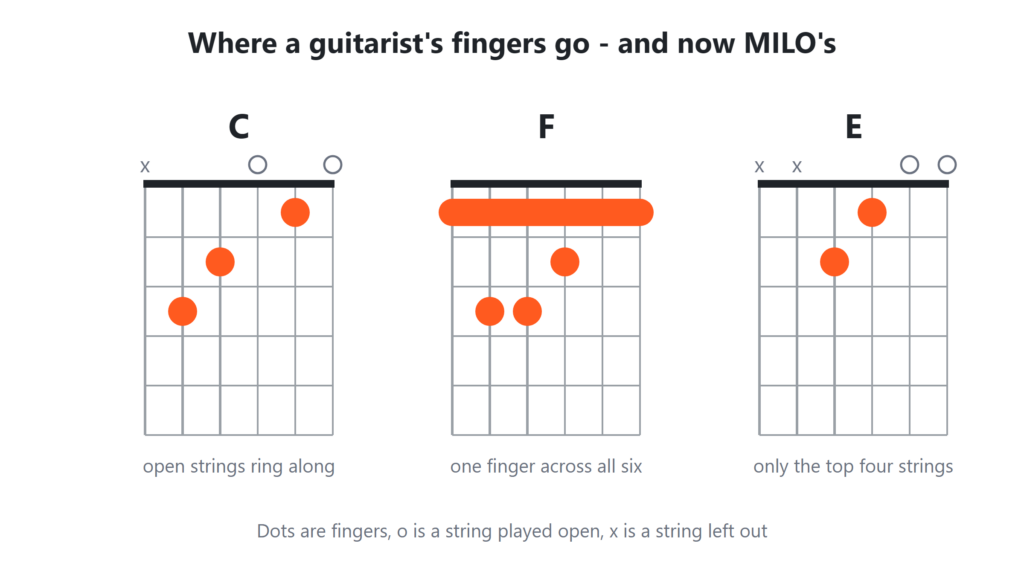
2. Every string has its own voice
A classical guitar has two kinds of string. The three thin ones are plain nylon and sound clear and bright. The three thick ones are wrapped in fine metal wire and sound warm and round. The same note can often be played on either kind, and it sounds different on each.
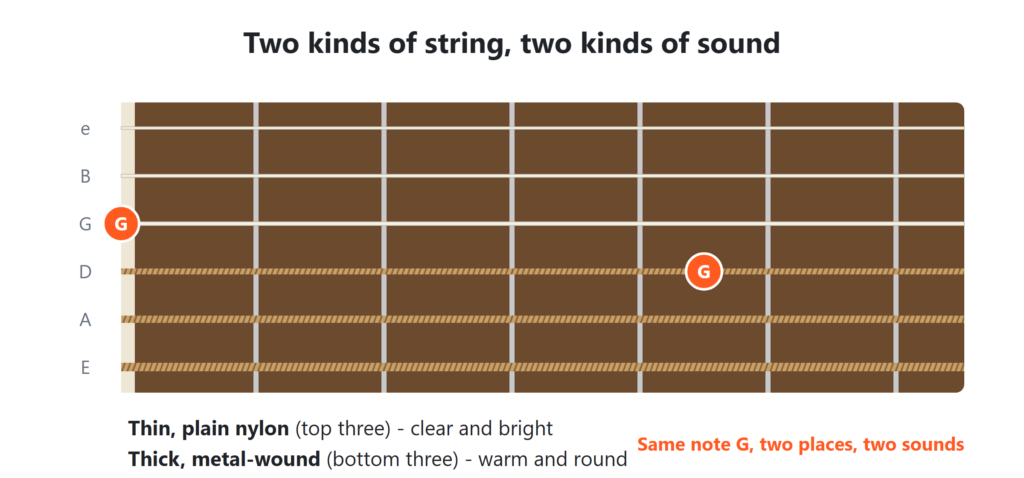
Now there are samples for differnt string and note combinations. So when a chord puts a note on a thick string, you now hear a thick string. Listen to the same note G, first on a thick string, then on a thin one, twice:
3. Soft, medium and hard
Every sample has three variations now: plucked softly, normally and hard. A harder pluck doesn’t only sound louder, it sounds brighter too, just like a real guitar.
How to get it
Update MILO on the Firmware Update page. It installs the new firmware and the new guitar sounds in one go, and takes a few minutes.
The new guitar recordings come from the University of Iowa Musical Instrument Samples, recorded by Lawrence Fritts.
Leave a Reply